Why Some Sports Icons Age Well (And Others Don’t)
Lorenzo Parks
September 19, 2026
Professional sports are built around youth. Speed, explosiveness, reaction time, and recovery all matter enormously, and many of those qualities become harder to maintain with age. Yet every generation produces athletes who somehow remain effective long after their peers have disappeared from the highest level.
The interesting part is that they do not necessarily stay the same.
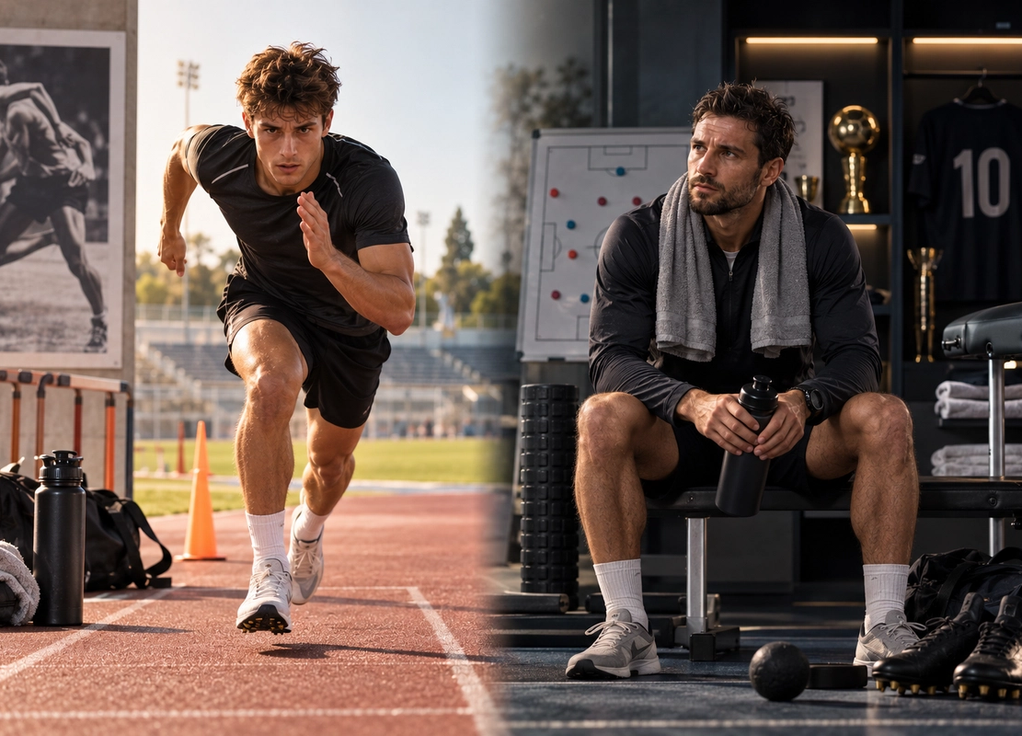
In many cases, the sports icons who age best survive precisely because they stop trying to be the athlete they were at 23. They adjust how they play, train, recover, and think about performance.
Athletic longevity is therefore not simply about resisting aging. It is often about adapting to it better than everyone else.
Explosiveness is difficult to preserve forever
Different physical qualities change at different rates, but sports built heavily around acceleration, reaction speed, and repeated explosive movement can become especially demanding as athletes get older.
A young player may build an entire style around being faster than opponents.
That advantage can be enormous.
But if the difference in speed begins to shrink, the athlete needs other ways to remain effective.
This is why longevity frequently requires technical and tactical evolution.
An older athlete may move less but position themselves better. They may choose moments to accelerate rather than constantly playing at maximum intensity.
Instead of winning every situation physically, they begin winning more situations before the physical contest even starts.
The smartest athletes become more efficient
Young athletes can sometimes solve mistakes with athleticism.
Take a poor position, then sprint back.
Make a slightly inefficient movement, then compensate with explosiveness.
Older athletes have less room for wasted effort.
That can encourage efficiency.
Experienced players recognize patterns earlier because they have encountered similar situations thousands of times.
A veteran soccer midfielder may know where the next pass is going before it happens. An experienced basketball player may anticipate where a rebound will fall. A tennis player may recognize an opponent’s preferred pattern in a particular situation.
Experience cannot completely replace physical decline.
But it can reduce how often raw athleticism is required.
The athlete appears to have more time because they are processing the situation earlier.
Technique tends to age better than pure athleticism
Athletic styles built around exceptional technique can sometimes survive physical decline more effectively.
A technically precise athlete does not necessarily need to dominate every opponent through speed or power.
Touch, timing, balance, accuracy, positioning, and decision-making can remain extremely valuable.
This helps explain why athletes who develop multiple dimensions to their game often have more options later in their careers.
A player whose only extraordinary weapon is speed faces a difficult problem when that speed decreases.
A player with excellent technique, tactical awareness, passing, positioning, and finishing has several tools to rely on.
The lesson is not that athleticism is unimportant.
It is that versatility creates options.
Great athletes change their roles
One of the clearest signs of successful athletic aging is role evolution.
A basketball player who once attacked the basket constantly may rely more heavily on shooting, positioning, and playmaking later.
A soccer winger may move into a more central position.
A tennis player may shorten points and become more aggressive rather than relying on endless defensive rallies.
The athlete is still competing at a high level, but the job has changed.
This can be psychologically difficult.
Elite athletes build identities around the qualities that made them exceptional.
Accepting that those qualities are changing requires humility.
Some athletes adapt.
Others continue trying to reproduce the exact style that worked during their physical peak.
The sport eventually exposes the difference.
Training has to evolve too
The training program that helps a 21-year-old improve may not be ideal for the same athlete at 36.
Younger athletes often tolerate larger workloads and recover more quickly from demanding sessions.
As careers progress, recovery can require more attention.
Veterans may reduce unnecessary training volume while preserving the work that most directly supports performance.
This does not necessarily mean training becomes easy.
It becomes more selective.
Strength training may focus increasingly on maintaining physical capacity. Mobility and rehabilitation work can become more important. High-intensity sessions may need to be positioned more carefully around competition.
The goal shifts from constantly adding fitness to preserving the qualities that matter most.
Recovery becomes a competitive advantage
At elite levels, almost everyone trains hard.
The difference may be how well athletes recover from that work.
Sleep, nutrition, hydration, workload management, rehabilitation, and appropriate rest become increasingly important across long careers.
Older athletes often become exceptionally disciplined about these areas because they feel the consequences more quickly.
A poor night’s sleep at 22 might be inconvenient.
Later in a career, the same mistake combined with travel and competition can have a larger effect.
Longevity therefore requires managing the hours outside training as seriously as the training itself.
The older the athlete becomes, the less room there may be for unnecessary physical stress.
Injury history changes the equation
Age alone does not determine longevity.
Two athletes of the same age can have completely different physical histories.
One may have experienced relatively few serious injuries.
Another may have undergone multiple surgeries and accumulated years of joint, tendon, or muscle problems.
Professional sport creates enormous repetitive stress.
Previous injuries can affect training options, movement, confidence, and recovery.
This is one reason comparisons based entirely on age can be misleading.
A 35-year-old athlete is not simply a 35-year-old athlete.
They are the product of every training session, competition, collision, surgery, rehabilitation period, and injury that came before.
Genetics still matter
Elite athletes do not all age at the same biological rate.
Genetic differences can influence body structure, muscle characteristics, cardiovascular capacity, injury susceptibility, and many other traits relevant to sport.
Some people simply retain certain athletic qualities unusually well.
That does not make training irrelevant.
It means training operates within individual biology.
Two athletes can follow similarly disciplined routines and still experience different career trajectories.
Sports culture sometimes prefers stories in which every result comes from work ethic because those stories are motivational.
Reality is more complicated.
Exceptional longevity usually reflects some combination of genetics, training, opportunity, injury history, lifestyle, sport, position, and adaptation.
Lifestyle decisions accumulate over decades
Professional careers are not shaped only by what happens during practice.
Habits outside sport accumulate too.
Consistent sleep, appropriate nutrition, sensible recovery, and managing alcohol and other lifestyle factors may not create obvious differences over one weekend.
Across 15 years, the cumulative effect can matter considerably.
This is why longevity often appears boring from the outside.
There is rarely one dramatic decision responsible for it.
Instead, there are thousands of small choices.
The same principle works negatively.
Poor recovery habits may be manageable temporarily when youth provides a large margin for error.
That margin becomes smaller with time.
The mental challenge may be as difficult as the physical one
Imagine spending your entire adult life being one of the best athletes in the world.
Then younger players begin arriving.
They recover faster.
They move quicker.
Coaches start managing your minutes.
Skills that once felt automatic require more preparation.
That transition can be psychologically difficult.
Athletes who age successfully often appear capable of adjusting expectations without losing competitiveness.
They accept different roles.
They become mentors.
They focus on specific contributions rather than needing to dominate every part of the game.
This requires a different kind of confidence.
Instead of constantly proving they are still their younger selves, they find ways to make their current version valuable.
Some sports naturally allow longer careers
Longevity also depends on the demands of the sport and position.
A role that depends heavily on repeated sprinting may have a different aging curve from one where anticipation, precision, or specialized technique plays a larger role.
Even within the same sport, positions can create very different physical demands.
That means asking why one athlete played until 40 while another declined at 32 can produce an unfair comparison if their jobs were completely different.
The relevant question is not simply how old they were.
It is what their sport required from their body at that age.
Technology has changed what aging athletes can do
Modern elite athletes have access to resources previous generations could barely imagine.
Training loads can be monitored.
Movement can be analyzed.
Nutrition can be individualized.
Injuries can be imaged and rehabilitated using increasingly sophisticated methods.
Sleep and physiological data can be tracked continuously.
Teams can identify signs of fatigue and adjust workloads before problems become obvious.
None of this makes aging disappear.
But it can help athletes manage their bodies more intelligently.
That may contribute to more elite performers extending careers that previous generations would have considered unusually long.
The athletes who age best become different athletes
The most fascinating long careers are not necessarily stories about defeating time.
They are stories about adaptation.
The 37-year-old version of an athlete may be slower than the 25-year-old version.
But they may also be smarter, calmer, technically sharper, and much more efficient.
They know which movements matter.
They understand opponents.
They recognize situations earlier.
They waste less energy.
They train with greater precision and recover more deliberately.
Eventually, biology wins. No professional athlete remains at their peak forever.
But the icons who age particularly well understand something important before that moment arrives.
Longevity does not require pretending you are still 25.
It requires becoming exceptionally good at being the athlete you are now.