
The Quiet Habits of Every Great Athlete
Connor Doyle
September 19, 2026
Great athletes are usually remembered for the visible moments. The winning shot. The record-breaking race. The perfect performance under pressure. The trophy lifted in front of thousands of people.
What we rarely see are the thousands of ordinary days that made those moments possible.
Elite performance is not built exclusively during championships. It develops during training sessions without crowds, meals nobody photographs, early nights, recovery days, repetitive drills, and hours spent practicing skills that already look effortless.
The habits behind great athletes are often surprisingly unglamorous. Their advantage is not that every day is extraordinary. It is that they become exceptionally good at doing ordinary things consistently.
They practice the basics long after they become good at them
Beginners practice fundamentals because they have to.
Great athletes continue practicing them because they understand how important they are.
A professional basketball player still practices basic shooting mechanics. An elite soccer player still works on first touch and passing. A world-class tennis player still repeats serves. A swimmer still thinks about technique.
The difference is the level of precision.
At the highest level, tiny improvements matter because everyone is already talented.
Great athletes therefore do not constantly search for more complicated exercises simply to make training feel advanced.
They refine movements they have performed thousands of times.
Mastery often looks like repetition with increasingly better attention.
They train when nobody is watching
Competition provides immediate feedback.
Training often does not.
There is no stadium cheering when an athlete completes a recovery session correctly or spends an extra 20 minutes improving technique.
This is where discipline becomes important.
Elite athletes cannot depend entirely on external motivation because most of their work happens away from competition.
They learn to complete sessions because the session belongs in the plan, not because they happen to feel inspired that morning.
That does not mean motivation never matters.
It means motivation is not required every time.
Professionalism begins when the work continues after the excitement disappears.
They understand the difference between hard and useful
One of the biggest misconceptions about elite athletes is that they train at maximum intensity every day.
They generally cannot.
High-level training creates enormous physical stress. If every session became a test of toughness, recovery would eventually become impossible.
Great athletes learn to distinguish between training hard and training productively.
Some sessions are intentionally demanding.
Others focus on technique, mobility, tactical preparation, or recovery.
An easy session is not wasted simply because it does not leave someone exhausted.
The purpose of training is to improve performance, not to prove how much suffering an athlete can tolerate.
They protect sleep like part of the program
Sleep is not something that happens after training.
It is part of training.
Athletes who consistently sleep poorly may struggle with recovery, reaction time, concentration, mood, and training quality.
That makes sleep one of the least exciting but most important performance habits.
Elite athletes often structure routines around getting enough rest, particularly during periods of heavy training and competition.
This can mean making boring decisions.
Leaving earlier.
Turning down late nights.
Changing travel routines.
Putting the phone away.
There is no highlight video for going to bed on time.
But the next day’s performance remembers.
They eat for what they need to do
Elite athletes cannot treat nutrition as an unrelated lifestyle category.
Food supports training.
Different sports create different nutritional demands. A marathon runner does not necessarily eat like a heavyweight strength athlete. A soccer player competing twice in one week may need a different strategy from someone in an off-season training block.
The underlying habit is intentionality.
Athletes learn which foods help them train, recover, and compete.
That does not mean every meal is perfectly optimized.
It means nutrition generally supports the work rather than constantly fighting against it.
At high levels, consistency matters more than one supposedly perfect meal.
They learn to tolerate boredom
Improvement is repetitive.
That can be difficult because humans naturally enjoy novelty.
Great athletes become comfortable with repetition.
They can perform the same movement again and still search for something to improve.
The foot was slightly late.
The body position could be better.
The timing was different.
The breathing pattern changed.
What looks identical from the outside can contain dozens of details to someone with expertise.
This ability to remain mentally engaged with repetitive work is one of the quiet advantages of elite performers.
They do not need every training session to entertain them.
They need it to teach them something.
They study themselves
Great athletes pay attention.
They notice how their bodies respond to different workloads. They recognize patterns in performance. They learn which situations make them rush decisions and which routines help them settle before competition.
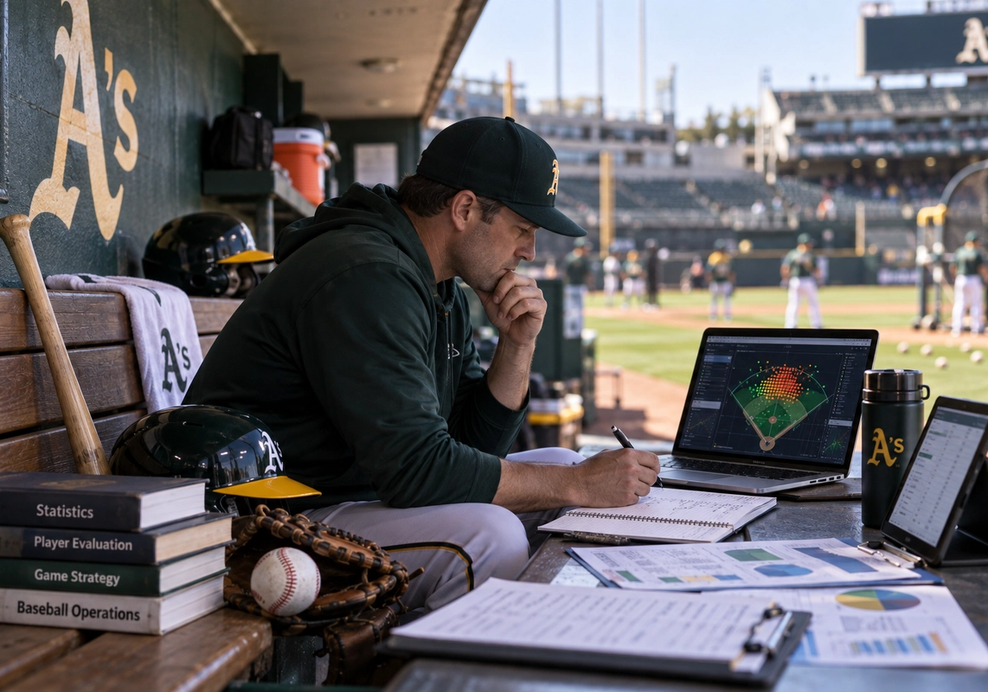
Modern athletes may use video, performance data, coaches, wearable technology, and detailed training records.
But the principle existed long before modern technology.
Elite performers develop strong self-awareness.
They ask why something worked.
They ask why something failed.
They become students of their own performance.
That curiosity turns experience into information.
They accept coaching without surrendering responsibility
Behind most great athletes is a network of people.
Coaches, teammates, physiotherapists, doctors, strength coaches, analysts, nutrition professionals, and others may all contribute.
Elite athletes learn to use that expertise.
But they also understand that nobody else can perform for them.
A coach can design the perfect session.
The athlete still has to execute it.
A physiotherapist can create a rehabilitation plan.
The athlete still has to complete the exercises.
The best performers often combine coachability with personal responsibility.
They listen carefully without becoming passive.
They recover deliberately
Rest is sometimes treated as the opposite of discipline.
For elite athletes, recovery is often a form of discipline.
They understand that adaptation requires time.
Recovery might involve sleep, appropriate nutrition, hydration, mobility work, easier training, physiotherapy, or simply leaving enough space between demanding sessions.
The exact strategies vary enormously between sports and individuals.
The important habit is respecting recovery instead of treating exhaustion as proof of commitment.
Sometimes the professional decision is to train harder.
Sometimes it is to stop.
Knowing the difference is a skill.
They do not let one bad performance become a story
Every athlete fails.
Even the greatest miss shots, lose matches, make tactical mistakes, and have terrible days.
The psychological danger begins when one performance becomes an identity.
“I played badly today” becomes “I am playing badly.”
Then it becomes “I am not good enough.”
Elite athletes learn ways to interrupt that progression.
They review mistakes, identify useful lessons, and eventually return attention to the next action.
This does not mean they never feel disappointed.
Competitive people often care enormously about failure.
The skill is preventing disappointment from controlling what happens next.
They focus heavily on controllable things
Sports contain uncertainty.
A referee can make a controversial decision.
Weather can change.
An opponent can produce the performance of their life.
An injury can happen.
A lucky bounce can decide a match.
Athletes cannot eliminate these variables.
They can control preparation, effort, positioning, decision-making, recovery, and how they respond afterward.
Great performers repeatedly bring attention back to those controllable elements.
That protects energy.
Worrying endlessly about something you cannot influence does not improve performance.
Preparing for what you can influence sometimes does.
They have routines for pressure
Pressure can make familiar actions suddenly feel unfamiliar.
That is why athletes build routines.
A tennis player may bounce the ball the same number of times before serving.
A basketball player may follow the same free-throw sequence.
A runner may repeat the same pre-race warm-up.
These routines reduce unnecessary decisions.
They create familiarity inside an unfamiliar environment.
The stadium may be louder.
The stakes may be enormous.
But the athlete can still return to a process they have repeated hundreds of times.
Routine creates something stable when everything around the athlete feels unstable.
They are willing to change
Consistency does not mean stubbornly repeating the same program forever.
Bodies change.
Sports evolve.
Competitors adapt.
Great athletes adjust with them.
A young athlete may depend heavily on speed and explosiveness. Later, experience, positioning, efficiency, and technical precision may become more important.
Training methods may also need to change as an athlete ages.
Longevity often belongs to athletes capable of accepting that what worked five years ago may not be the best approach now.
Adaptation is not abandoning discipline.
It is applying discipline intelligently.
Their real advantage is accumulated ordinary work
Talent matters.
Genetics matter.
Coaching, resources, opportunity, health, and circumstances matter too.
But talent alone cannot explain years of elite performance.
Great athletes repeatedly perform small behaviors whose value becomes visible only after they accumulate.
They practice fundamentals.
They sleep.
They recover.
They study.
They listen.
They repeat.
They return after bad performances.
They make adjustments when necessary.
None of these habits is particularly cinematic.
That is precisely the point.
By the time the world sees the spectacular performance, most of the work behind it has already happened quietly.
The trophy is simply the visible part.