The Baseball Players Every Fan Should Know (From Every Era)
Jaimie Lee
September 19, 2026
Baseball has been played professionally for so long that learning its history can feel like learning several different sports at once. The game of Babe Ruth’s era looked very different from the game Jackie Robinson entered, which looked different from the baseball of Willie Mays, which looked different again from the sport played by Barry Bonds, Derek Jeter, or Shohei Ohtani.
That long history is part of baseball’s appeal.
Certain players became more than statistical leaders. They changed how the game was played, broke barriers, defined generations, or became cultural figures whose names remain recognizable decades later.
You do not need to memorize every Hall of Famer to understand baseball history. Start with these players, and much of the sport’s story begins to connect.
Babe Ruth transformed the meaning of power
Any introduction to baseball history has to include Babe Ruth.
Ruth began his major-league career as an outstanding pitcher before becoming the game’s most famous power hitter. At a time when baseball was much less centered around home runs, Ruth demonstrated how dramatically one hitter could change an offense by driving the ball out of the ballpark.
His enormous home-run totals helped reshape baseball’s entertainment value.
Fans came to see the home run as one of the sport’s defining spectacles, and Ruth became one of America’s first truly national sports celebrities.
His influence extended beyond statistics. He helped establish the idea of the baseball superstar: a player whose personality and reputation could become nearly as famous as the team itself.
Lou Gehrig became a symbol of consistency
Playing alongside Ruth on the New York Yankees was another legendary figure: Lou Gehrig.
Gehrig combined tremendous offensive production with remarkable durability.
For decades, his streak of consecutive games played stood as one of baseball’s most famous records, earning him the nickname “The Iron Horse.”
His career ended after he developed amyotrophic lateral sclerosis, the disease that later became widely associated with his name in the United States.
Gehrig’s farewell speech at Yankee Stadium became one of the most remembered moments in American sports.
His legacy represents both extraordinary consistency on the field and the deeply human side of sports history.
Jackie Robinson changed far more than baseball
Jackie Robinson’s importance cannot be measured only through his performance.
When Robinson joined the Brooklyn Dodgers in 1947, he broke Major League Baseball’s modern racial color barrier.
He entered an environment in which he faced intense racism from spectators, opponents, and others around the sport while carrying expectations far beyond those normally placed on an athlete.
And he still became an exceptional major-league player.
Robinson’s career became an important part of the broader history of racial integration in American public life.
MLB later retired his number, 42, across the major leagues, making him unique in the sport’s history.
Understanding Jackie Robinson is essential to understanding both baseball and 20th-century America.
Ted Williams became the model of the pure hitter
Ted Williams approached hitting almost like a science.
He became famous for his understanding of the strike zone, extraordinary plate discipline, and ability to combine power with consistency.
Williams wanted to understand exactly which pitches he could hit most effectively.
That philosophy feels remarkably modern.
Long before today’s advanced tracking technology, he thought deeply about pitch location, swing decisions, and the relationship between patience and offensive production.
His career was also interrupted by military service, adding another unusual dimension to his story.
For generations of hitters, Williams represented the ideal of mastering the craft of hitting rather than simply swinging aggressively.
Willie Mays represented the complete player
If you wanted to explain what a complete baseball player looks like, Willie Mays would be a good place to start.
Mays could hit for power, run, throw, defend, and make difficult plays in center field.
His famous over-the-shoulder catch during the 1954 World Series—simply remembered as “The Catch”—became one of baseball’s defining visual moments.
But focusing on one play understates his career.
Mays represented the rare player who could influence almost every part of a game.
He became one of baseball’s great all-around stars and an important figure in the generation of Black players who followed Jackie Robinson into the major leagues.
Hank Aaron quietly chased baseball’s biggest record
For decades, Babe Ruth’s career home-run record seemed almost untouchable.
Then Hank Aaron approached it.
Aaron’s pursuit became one of the biggest stories in American sports. It also exposed him to horrific racist abuse and threats as a Black player preparing to surpass Ruth.
In 1974, Aaron hit career home run number 715, moving past Ruth.
His achievement was not built around one extraordinary season.
Aaron’s greatness came from sustained excellence over an exceptionally long career. He combined power with consistency year after year.
His story is both a baseball achievement and a reminder of the social environment surrounding American sports during that period.
Nolan Ryan made velocity legendary
Pitchers have always tried to overpower hitters, but Nolan Ryan became almost synonymous with the idea of the intimidating fastball.
Ryan’s career lasted across multiple decades, and his strikeout totals became extraordinary.
He also threw seven no-hitters, demonstrating how completely dominant he could become when everything was working.
Ryan was not a model of perfect control. He could walk hitters too.
But his ability to generate strikeouts and maintain elite velocity helped establish a version of pitching that modern baseball increasingly emphasizes.
Today, when fans obsess over pitchers throwing around 100 miles per hour, they are watching a game in which velocity has become central to pitching identity.
Ryan helped make that fascination part of baseball culture.
Rickey Henderson changed what speed could do
Rickey Henderson could disrupt a game without hitting a home run.
His greatest weapon was speed.
Henderson became baseball’s career leader in stolen bases, but the numbers alone do not capture what his presence did to opponents.
When Henderson reached first base, pitchers had to worry about him stealing second. That could distract the pitcher, alter pitch selection, and force the defense to react.
He was also exceptional at reaching base, which gave him constant opportunities to use that speed.
Henderson demonstrated that offensive dominance could come from pressure and movement as much as raw power.
Ken Griffey Jr. became the star of a generation
For many fans who grew up during the 1990s, Ken Griffey Jr. was baseball.
His swing became instantly recognizable. His backwards cap became part of his image. His spectacular defense in center field made him exciting even when he was not batting.
Griffey combined elite athletic ability with enormous cultural popularity.
He also became one of the defining home-run hitters of his generation without the same association with performance-enhancing drugs that complicated the reputations of several other stars from baseball’s power-heavy era.
His career helped connect baseball’s traditional superstar culture with a newer generation shaped by television, video games, sneakers, and modern sports marketing.
Barry Bonds represents baseball’s most complicated era
Few players illustrate the complexity of baseball history better than Barry Bonds.
Bonds was already an extraordinary all-around player before producing some of the most extreme offensive seasons baseball had ever seen. He ultimately set MLB’s career and single-season home-run records.
But his legacy is inseparable from baseball’s performance-enhancing-drug era and the controversies surrounding it.
That makes Bonds essential to understanding the sport.
Baseball history is not simply a collection of inspirational stories and clean records. It includes periods when performance, rules, enforcement, technology, and public attitudes collided in complicated ways.
Bonds sits at the center of one of those periods.
Derek Jeter became the face of a modern dynasty
Derek Jeter’s importance comes partly from timing and place.
As shortstop for the New York Yankees, he became one of the central figures of a team that repeatedly reached baseball’s biggest stage during the late 1990s and early 2000s.
Jeter became associated with postseason baseball, consistency, leadership, and the pressure of playing for one of the sport’s most famous franchises.
He was not defined by overwhelming home-run power or extraordinary physical size.
Instead, his career was built around sustained hitting, durability, memorable postseason moments, and remaining central to the Yankees for two decades.
For an entire generation, Jeter became one of baseball’s most recognizable players.
Shohei Ohtani challenged assumptions about specialization
Modern baseball became increasingly specialized over time.
Pitchers pitched. Hitters hit.
Then Shohei Ohtani arrived in Major League Baseball and demonstrated that an elite player could potentially do both at an extraordinary level.
Ohtani’s two-way ability immediately invited comparisons with Babe Ruth, one of the few historical figures who could provide any meaningful reference point.
What makes Ohtani so unusual is not simply that he can pitch and hit.
It is that he has performed at elite levels in both disciplines, while also becoming one of baseball’s biggest international stars.
His career represents baseball’s increasingly global identity and its continuing ability to produce something the sport thought it had left behind.
Baseball history is really a chain of different generations
These players did not compete under identical conditions.
Equipment changed. Ballparks changed. Training changed. Integration transformed the talent pool. Pitching became more specialized. Medical science improved. Analytics changed strategy. The global reach of the sport expanded.
That makes direct comparisons between eras difficult.
But understanding baseball does not require deciding whether Babe Ruth was better than Willie Mays, whether Hank Aaron was better than Barry Bonds, or how Shohei Ohtani would have performed in another generation.
The more interesting question is what each player represented.
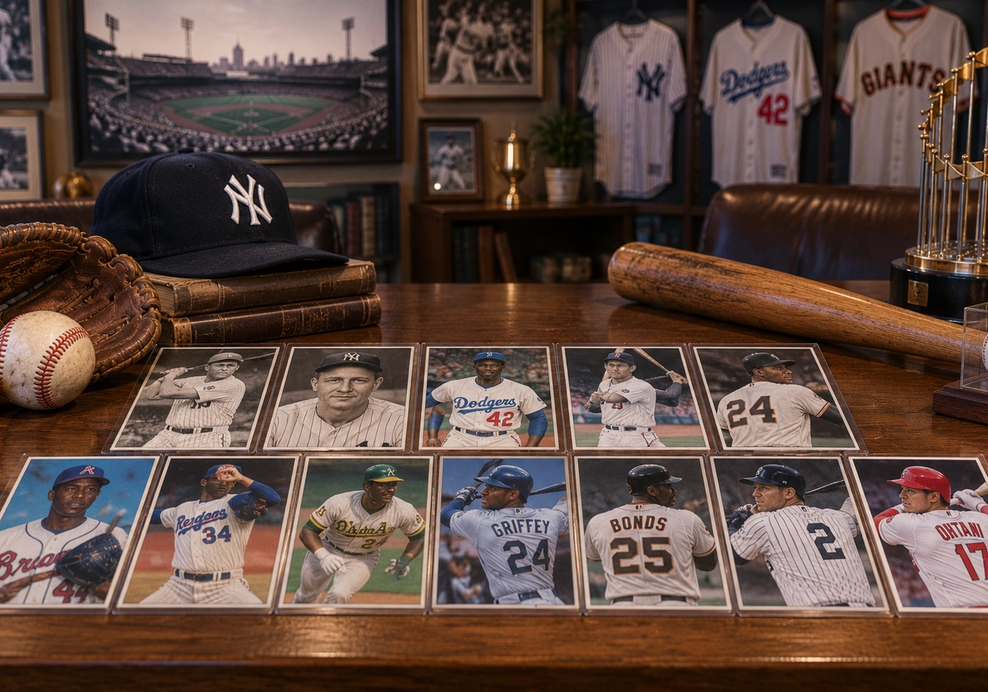
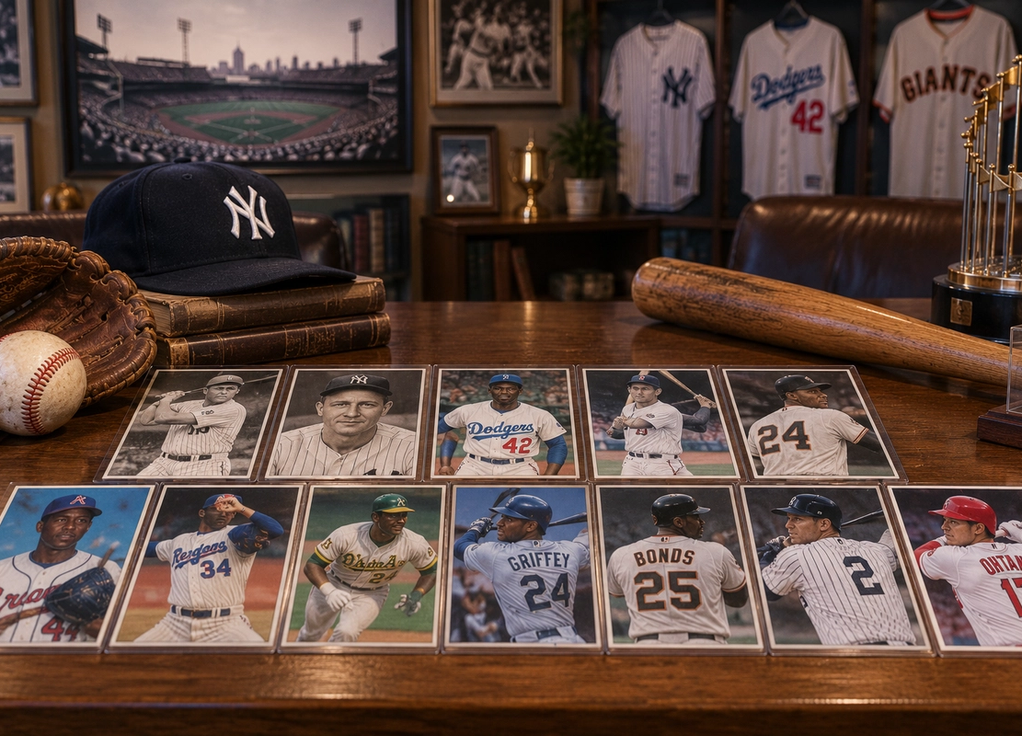
Ruth represented the rise of power. Robinson represented integration and social change. Mays represented complete athletic excellence. Aaron represented sustained greatness. Henderson weaponized speed. Griffey became a cultural icon. Bonds embodied both extraordinary performance and one of baseball’s most controversial periods. Jeter defined a championship generation. Ohtani reopened possibilities the modern game had largely abandoned.
Together, their careers tell a much bigger story.
They show how baseball keeps changing while somehow remaining connected to the game people were watching more than a century ago.