The Football Positions Explained (For People Who Don’t Watch)
Lorenzo Parks
September 19, 2026
American football can be intimidating if you did not grow up watching it. There are 22 players on the field at once, dozens more standing on the sidelines, constant substitutions, and position names that sound strangely specific. Quarterbacks, linebackers, tight ends, safeties, tackles, guards—somehow everyone is playing the same sport.
The easiest way to understand football positions is to stop thinking about all 11 players at once.
Every team is essentially divided into three units: offense, defense, and special teams. The offense tries to move the ball and score. The defense tries to stop it. Special teams handle situations involving kicks.
Within those groups, every position has a particular job.
The quarterback runs the offense
The quarterback is the position most casual viewers recognize.
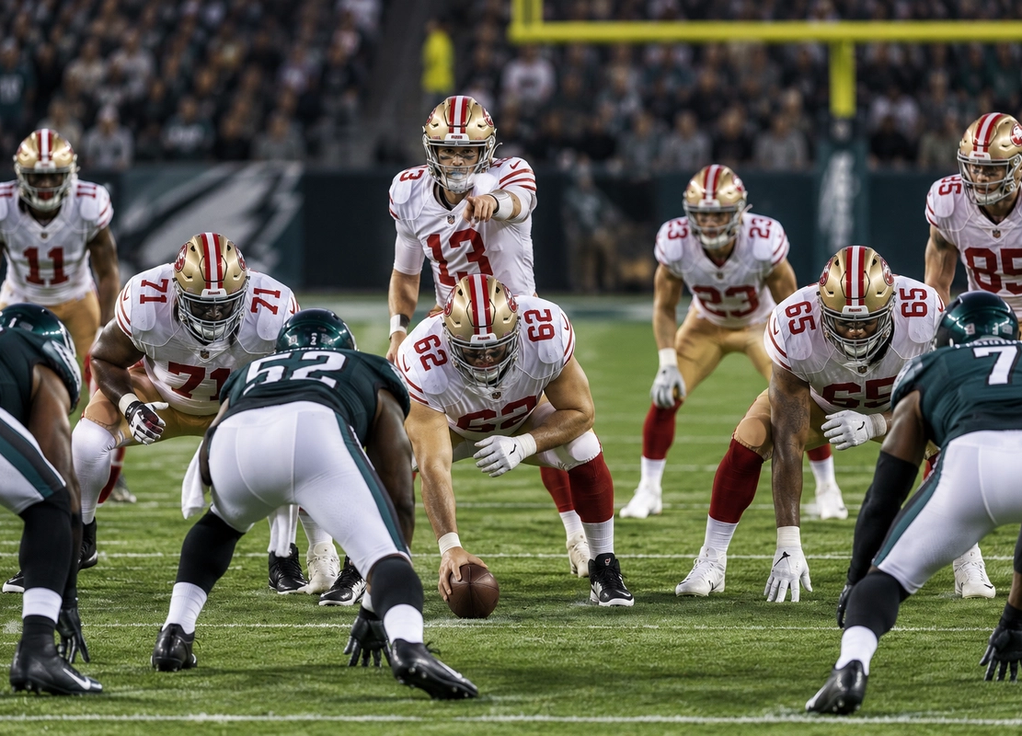
On most offensive plays, the quarterback receives the ball from the center and becomes the main decision-maker. Depending on the play, he may throw the ball to a receiver, hand it to a running back, or run with it himself.
Quarterbacks also have to read the defense.
Before the ball is snapped, a quarterback looks at how defenders are positioned and tries to anticipate what they are about to do. After the play begins, he may have only a few seconds to determine where to throw.
That combination of physical skill and rapid decision-making makes quarterback arguably the most influential position in American football.
It also explains why elite quarterbacks receive so much attention. A great quarterback can shape almost everything an offense does.
Running backs carry the ball
Running backs generally line up behind or beside the quarterback.
Their traditional responsibility is rushing: taking the ball from the quarterback and trying to advance through the defense.
That sounds simple until you watch what happens in front of them.
Running backs must identify tiny openings between defenders, accelerate through those gaps, avoid tackles, protect the football, and sometimes change direction almost instantly.
Modern running backs often contribute to passing plays as well. They may catch short passes or stay near the quarterback to block an approaching defender.
A good running back therefore needs more than speed. Vision, balance, strength, and decision-making are extremely important.
Wide receivers are the main pass catchers
Wide receivers usually begin plays closer to the outside edges of the formation.
Their primary job is to get open and catch passes.
But “getting open” involves much more than simply running away from defenders. Receivers follow specific routes designed to create separation. They might sprint straight downfield, suddenly cut toward the middle, stop and turn, or change direction based on the defense.
Timing with the quarterback is crucial.
The quarterback may throw the football before the receiver has even completed his route, trusting that the receiver will arrive at the correct location.
Wide receivers therefore need speed and catching ability, but they also need precise footwork, awareness, and an understanding of defensive coverage.
Tight ends are football’s hybrid players
A tight end sits somewhere between a receiver and an offensive lineman.
Tight ends are generally larger than wide receivers but more mobile than most offensive linemen. On one play, a tight end may block a defender. On the next, he may run downfield and catch a pass.
That versatility makes the position strategically useful.
If the defense treats the tight end primarily as a blocker, the offense can send him into a passing route. If the defense responds with a smaller player who is better at covering passes, the offense may use the tight end’s size advantage when blocking or catching contested passes.
The best tight ends create problems precisely because defenses cannot always predict what role they will perform.
The offensive line protects everything
The five offensive linemen rarely receive the same attention as quarterbacks or receivers, but almost nothing works without them.
The center lines up in the middle and snaps the ball to the quarterback. Two guards generally line up beside the center, with two tackles positioned farther outside.
Together, they protect the quarterback during passing plays and create openings for running backs during rushing plays.
Their work happens incredibly quickly.
When the quarterback drops back to throw, offensive linemen must prevent powerful defenders from reaching him. During running plays, they attempt to move defenders away from the area where the runner needs to go.
An offense with talented skill players can still struggle badly if its offensive line cannot protect them.
Defensive linemen attack from the front
Directly across from the offensive line is the defensive front.
Defensive tackles generally operate around the interior, while defensive ends or edge defenders attack from wider positions depending on the defensive system.
Their jobs include stopping running plays and pressuring the quarterback.
When a defender tackles the quarterback behind the line of scrimmage on a passing play, it is called a sack.
Pressure can still be valuable even without a sack. If a defender forces the quarterback to throw earlier than intended, the entire play can break down.
Strong defensive linemen therefore influence games even when their names do not appear prominently in the statistics.
Linebackers do a little bit of everything
Linebackers generally position themselves behind the defensive line.
They are among football’s most versatile defenders.
A linebacker may tackle a running back, cover a tight end or running back on a passing play, rush the quarterback, or move into a particular area of the field to defend passes.
Because their responsibilities change constantly, linebackers need a combination of strength, speed, and awareness.
They also often play an important role in communicating defensive assignments before the snap.
If the defensive line is the first barrier, linebackers are often the second.
Cornerbacks defend receivers
Cornerbacks primarily defend against the passing game.
They commonly line up near wide receivers and attempt to prevent them from catching the football.
This is an extremely difficult job.
A receiver knows exactly where he intends to run. The cornerback does not. The defender must react while maintaining enough position to challenge the eventual pass.
Cornerbacks may play very close to receivers in man-to-man coverage or defend a particular area in zone coverage.
Speed is obviously important, but successful cornerbacks also rely on anticipation, technique, and the ability to understand what quarterbacks and receivers are trying to do.
Safeties protect the deeper part of the field
Safeties usually begin farther away from the line of scrimmage.
Their positioning gives them a broader view of the developing play.
Traditionally, defenses use a free safety and a strong safety, although modern defensive schemes make those distinctions increasingly flexible.
Safeties can provide deep pass coverage, help cornerbacks defend receivers, move forward to stop running plays, or occasionally rush the quarterback.
You can think of them as the defense’s last layer of protection. If an offensive player gets past everyone else, a safety may be the final defender capable of preventing a touchdown.
Special teams handle the kicking game
Not every football play belongs neatly to the offense or defense.
Special teams appear during kickoffs, punts, field goals, and extra-point attempts.
The kicker attempts field goals and extra points and may also handle kickoffs. The punter kicks the ball away when the offense chooses to surrender possession while trying to force the opponent to begin farther downfield.
Return specialists attempt to catch kicks and run them back.
Long snappers, blockers, coverage players, and returners all have specialized responsibilities that can dramatically affect field position.
Special teams may receive less attention, but one missed field goal or major return can decide an entire game.
The simplest way to watch football
You do not need to identify every position immediately.
Start with the quarterback. Watch where the ball goes. If he hands it off, focus on the running back and the offensive line. If he drops back, watch the receivers and how the defense reacts.
Gradually, the apparent chaos starts becoming organized.
The quarterback directs the offense. Running backs carry the ball. Receivers and tight ends create passing options. Offensive linemen protect them. Defensive linemen and linebackers attack and contain the offense, while cornerbacks and safeties protect against passes.
Once those basic roles make sense, football becomes much easier to follow—and those 22 people running in different directions suddenly stop looking quite so random.